
The SAD Diet vs the Happy Diet
Discover why the Standard American Diet is linked to low energy, cravings and chronic health issues — and how a whole-food approach restores balance.
11/27/20252 min read
Rethinking the SAD Diet: Why Whole Foods Still Win
Food has never been more confusing. We’ve lived through decades of trends — low-fat, low-carb, sugar-free, detox diets and “miracle” meal plans. Now we’re in a new era, with appetite-suppressing medications gaining global attention.
With so many shifting theories, it’s no surprise people feel uncertain about what to eat, how much to eat and how to maintain their energy without relying on extremes.
The truth is simple: our bodies haven’t changed — but our food environment has.
How the SAD Diet Became the Global Norm
The Standard American Diet, often called the SAD diet, emerged in the convenience boom of the 1950s. It celebrated quick meals, packaged food and refined ingredients that were cheap and easy to produce.
Over time, this way of eating spread worldwide. The bright colours of fresh produce were replaced with bright labels on processed foods. Whole grains gave way to refined flour. Natural fats were swapped for industrial seed oils. Sugar sneaked into everything.
These foods are engineered to be hyper-palatable — easy to overeat, hard to stop — and many people now struggle with:
Cravings
Afternoon slumps
Mood swings
Disrupted hunger cues
Low energy
Not because they lack discipline, but because their physiology is reacting to a food system that overwhelms it.
The New Trend: Appetite-Suppressing Medications
GLP-1 and appetite-suppressing medications are becoming popular worldwide. For some, especially those with specific medical conditions, they can be transformative. They reduce appetite, stabilise blood sugar and support weight loss without the mental battle many face with food.
But they also highlight something deeper: many people feel they need to override their biology because the SAD diet makes natural hunger cues difficult to trust.
Medication can support health — but it doesn’t replace nourishment.
We still need protein for muscle, fats for hormones, micronutrients for brain function, and fibre for gut health. Whole foods remain the foundation.
And that’s where a simpler, more grounded approach becomes powerful.
A Better Way Forward: The Happy Food Pyramid
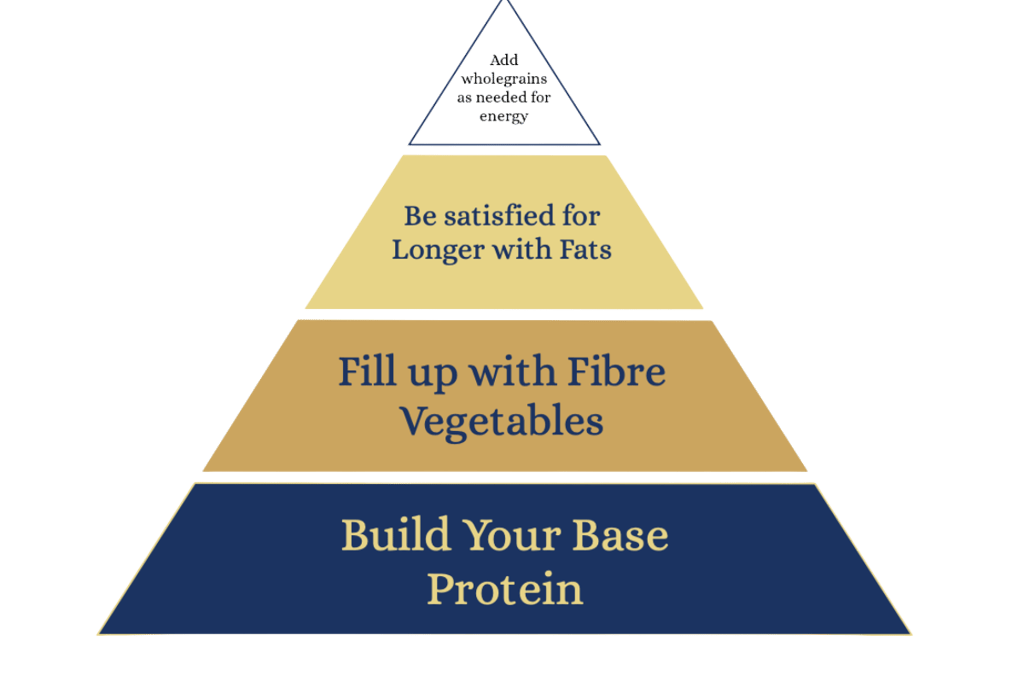
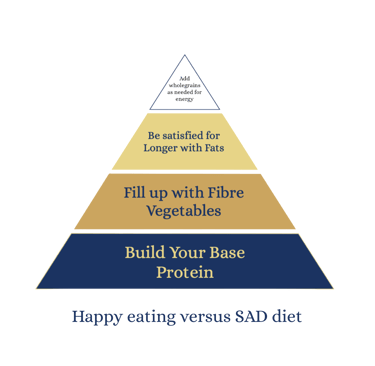
To bring clarity back to eating, I created the Happy Food Pyramid, a modern twist on a familiar visual. Instead of strict rules or fear-based messaging, it focuses on balance, energy and satiety.
Here’s how it works:
1. Protein Forms the Base
Protein stabilises blood sugar, supports muscle, balances hormones and keeps you fuller for longer.
2. Fibre-Rich Vegetables Build the Middle
Colourful vegetables support gut health, immunity and overall vitality.
3. Healthy Fats Keep You Satisfied
Olive oil, nuts, seeds, coconut and avocado support brain function, hormone health and steady energy.
4. Wholegrains as Needed
Add grains based on your lifestyle and movement — they can be a helpful energy source when used mindfully.
This whole-food foundation pairs beautifully with all lifestyles, including those using appetite-supporting medication who want to maintain muscle, support energy and protect long-term health.
Why Whole Foods Still Win
Whole foods give your body:
Steadier energy
Better mood
Clearer hunger cues
Improved digestion
Stronger immune function
It isn’t about perfection. It’s about presence — tuning in, nourishing your body and giving it the real food it’s designed to thrive on.
If you’re ready to feel more energised, uplifted and grounded in your wellbeing, a whole-food approach may be the simple shift that changes everything.
Phone/WhatsApp
+64 21 020 29366
Waikato Contact
Hours
Tuesday to Saturday 9am to 6pm
Please get in touch to enquire about alternative timing
Professional Affiliations

Legal Information
At Wellness Your Way Ltd, we value transparency and integrity in all that we do. Our legal policies outline how we protect your privacy, manage your information and deliver services with care and professionalism.
Terms and Conditions: Explains how our services operate, including payments, cancellations, digital resources and client agreements.
Privacy Policy: Details how we collect, store and protect your personal information in accordance with New Zealand privacy standards.
Disclaimer: Clarifies that our wellness, nutrition and NLP coaching services are for educational and lifestyle purposes only and are not a substitute for medical care.
© 2025 Wellness Your Way Ltd. Wellness Your Way® and the Wellness Your Way logo are registered trademarks of Wellness Your Way Ltd. All rights reserved.
Victoria Kruse | Wellness Your Way Ltd
Health & Nutrition Coaching | NLP Coaching
New Zealand