Sustainable Seafood & Mindful Consumption
Nourishing Health and the EnvironmentBlog post description.
1/29/20264 min read
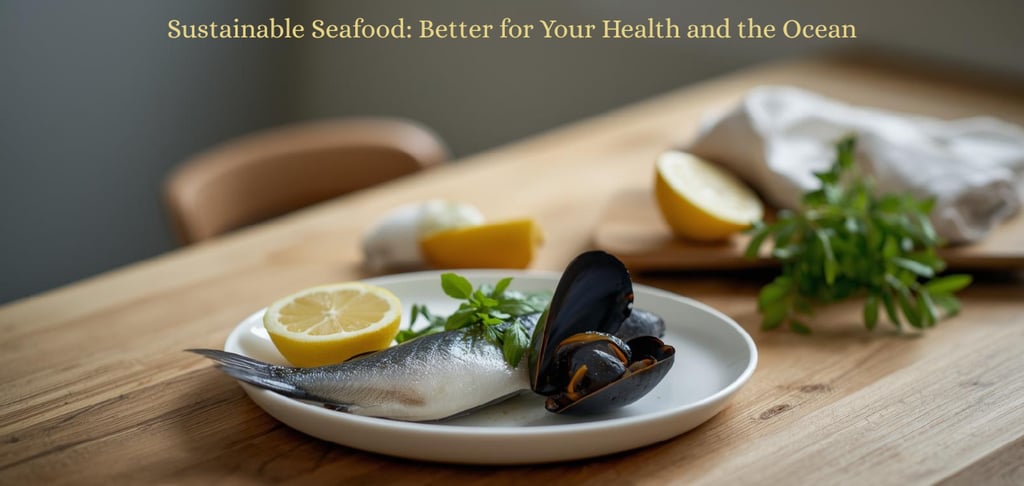
Seafood is often recommended as part of a healthy diet, yet how we choose seafood is just as important as how often we eat it. Sustainable seafood and mindful consumption are not about restriction, guilt or perfection. They are about making informed, intentional choices that support both personal wellbeing and the health of the environment we rely on.
When our food choices feel aligned with our values, they tend to feel easier, more sustainable and far less stressful over time.
Why Seafood Plays a Powerful Role in Health
From a nutritional perspective, seafood is one of the richest natural sources of omega 3 fatty acids. These essential fats support brain health, heart function, joint mobility and hormone balance.
For older adults, omega 3s help protect cognitive health and circulation.
For families and children, they support learning, emotional regulation and nervous system development.
For women navigating midlife and hormonal changes, omega 3s can help reduce inflammation and support metabolic health.
What’s important to remember is that nutrition works best when it’s consistent, not perfect. Regular inclusion of well-chosen foods has far more impact than short bursts of “doing it right”.
What Does Sustainable Seafood Really Mean?
Sustainable seafood refers to fish and shellfish that are caught or farmed in ways that protect fish populations and marine ecosystems. This includes responsible catch limits, protection of breeding habitats and fishing methods that minimise environmental damage.
When seafood is harvested responsibly, fish stocks are able to replenish, ecosystems remain resilient and future generations retain access to nutritious food. When it isn’t, biodiversity declines, food security becomes uncertain and ocean health suffers.
Sustainability isn’t an abstract concept. It directly influences what food is available, affordable and safe over time.
Learning From Global Best Practice
Some countries demonstrate what sustainable fishing can look like in practice. I spent many years living in Maldives, which is recognised as having one of the most sustainable fishing practices in the world.
In the Maldives, traditional fishing methods are still widely used — essentially one fisherman, one line, one fish. There are no large nets sweeping the ocean floor and no longline fishing that unintentionally catches sharks, turtles or dolphins. Fish are caught individually, by hand.
This approach dramatically reduces bycatch, protects reefs and allows fish populations to recover naturally. Fishing remains a livelihood for generations rather than becoming a short-term industry.
Seeing this model firsthand changes the way you think about food. Sustainability stops feeling like restriction and starts feeling like respect — for the ocean, for the food we eat and for the systems that sustain life.
Why Choosing Local Seafood Makes Sense
One of the simplest ways to support sustainability and health is to choose locally sourced seafood. In New Zealand, fisheries are generally well managed, with monitoring systems designed to protect both marine ecosystems and food quality.
Species such as hoki, sardines, mussels and farmed salmon are widely available and provide excellent nutritional value. Green-lipped mussels, in particular, are a standout option. They are rich in omega 3s, zinc and iron, and are produced with minimal environmental impact. In fact, mussel farming can actively improve water quality.
Choosing local seafood also offers reassurance around food safety. Some imported fish may come from waters with higher levels of environmental contamination, including mercury. While mercury exposure is most commonly linked to frequent consumption of large predatory fish, choosing New Zealand seafood provides additional confidence around environmental conditions and regulatory standards.
This isn’t about fear — it’s about informed choice.
Why Variety Matters
Mindful consumption includes variety. Rotating different types of seafood reduces pressure on any one species and broadens the range of nutrients you consume.
Smaller fish such as sardines and mackerel sit lower on the food chain and tend to accumulate less mercury, making them excellent options for regular inclusion. They are also rich in omega 3s and often more affordable.
Canned seafood is another practical and often overlooked option. Sardines, salmon and mackerel retain their nutritional value and are easy to keep on hand. Choosing varieties packed in water or olive oil keeps meals simple and nourishing.
Mindful Eating: How We Eat Matters Too
Mindful consumption isn’t just about what we eat — it’s also about how we eat.
Slowing down at meals supports digestion, improves nutrient absorption and helps the nervous system shift into a calmer, more restorative state. Eating without distraction allows hunger and fullness cues to work effectively.
Many people notice that when they eat more slowly and with awareness, they feel satisfied with simpler meals and smaller portions. This can be especially helpful for older adults or anyone experiencing digestive discomfort or low appetite.
Making Sustainable Seafood Practical at Home
Sustainable seafood does not need to be complicated or time-consuming.
Simple meals such as baked fish with seasonal vegetables, seafood chowders, fish tacos or a sardine and avocado sandwich can be both nourishing and comforting. For families, involving children in choosing or preparing meals helps build familiarity and confidence with seafood. For older adults, soups and gently cooked fish offer warmth, nourishment and ease of digestion.
The goal isn’t complexity — it’s consistency.
A Bigger Picture of Wellbeing
Sustainable seafood and mindful consumption remind us that wellbeing is never just personal. The food choices we make each day quietly shape our health, our environment and our future.
When those choices feel aligned with our values, they become easier to sustain. Small changes, made consistently, really do make a difference — for our bodies and for the world we live in.
Phone/WhatsApp
+64 21 020 29366
Waikato Contact
Hours
Tuesday to Saturday 9am to 6pm
Please get in touch to enquire about alternative timing
Professional Affiliations
Legal Information
At Wellness Your Way Ltd, we value transparency and integrity in all that we do. Our legal policies outline how we protect your privacy, manage your information and deliver services with care and professionalism.
Terms and Conditions: Explains how our services operate, including payments, cancellations, digital resources and client agreements.
Privacy Policy: Details how we collect, store and protect your personal information in accordance with New Zealand privacy standards.
Disclaimer: Clarifies that our wellness, nutrition and NLP coaching services are for educational and lifestyle purposes only and are not a substitute for medical care.
© 2025 Wellness Your Way Ltd. Wellness Your Way® and the Wellness Your Way logo are registered trademarks of Wellness Your Way Ltd. All rights reserved.
Victoria Kruse | Wellness Your Way Ltd
Health & Nutrition Coaching | NLP Coaching
New Zealand