Nutritional Literacy
In a World of Marketing Noise
3/9/20262 min read
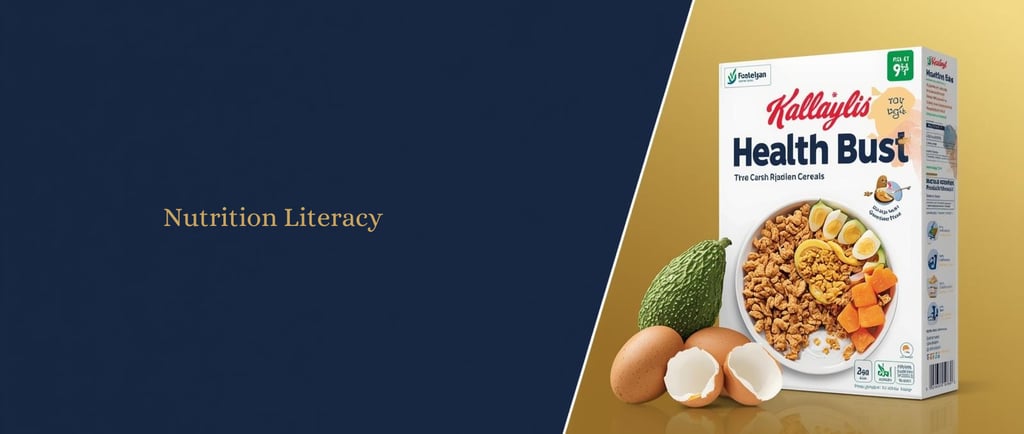
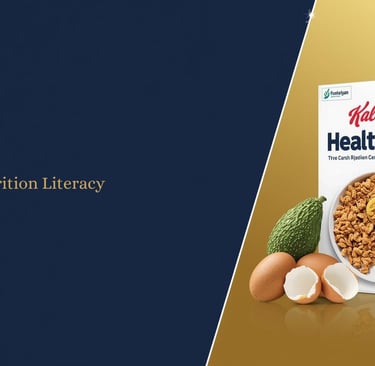
Walk down any supermarket aisle in New Zealand and you will see it everywhere: low fat, high protein, natural, plant based — and of course the familiar Health Star Rating printed clearly on the front of many packages.
It looks reassuring. Scientific. Official.
But most food packaging is designed to sell, not educate.
Nutritional literacy is not about becoming obsessive or fearful of food. It is about understanding enough to make calm, confident decisions in a marketplace built on influence.
Because confusion benefits marketing. Clarity benefits you.
The Health Star Rating — What It Really Means
The Health Star Rating system was introduced to help consumers compare similar products within a category. That phrase matters.
A cereal rated four stars is being compared to other cereals — not to whole foods like eggs, yoghurt or fruit. A snack bar with three and a half stars may still be highly processed and engineered for shelf life rather than nourishment.
Manufacturers can reformulate products to improve star ratings. Adding isolated protein or fibre can lift the score without changing the overall quality of the food.
The star is a shortcut.
And shortcuts are appealing when we are busy.
But nutritional literacy means looking beyond the shortcut.
Turn the Packet Over
If the front of a packet is making bold claims, turn it over.
Ingredients are listed in descending order by weight. If sugar, refined flour or industrial seed oils appear near the top, that tells you what the product is primarily made of.
The shorter and more recognisable the ingredient list, the closer the food is to its original form.
That is not about perfection.
It is about awareness.
The Influence of Social Media
The supermarket is not the only place influence happens.
Social media has created a new category of nutrition authority. Some influencers are qualified and evidence-based. Many are not.
Even more importantly, many are financially incentivised.
Affiliate links, sponsorship deals and discount codes shape recommendations. When someone is paid to promote a product, their message is not neutral.
That does not mean it is wrong.
It means bias exists.
Nutritional literacy includes media literacy. Ask yourself who benefits from the recommendation.
The Great Grandmother Rule
Years ago, someone shared advice with me that still applies today: eat food your great grandmother would eat.
It works across cultures.
Your great grandmother would recognise meat, fish, eggs, vegetables, fruit, nuts, seeds and grains prepared traditionally.
She would not recognise protein bars, emulsifiers or laboratory-designed flavour enhancers.
This guideline is not about nostalgia.
It is about simplicity.
When you choose foods that resemble their original form, you reduce exposure to marketing tactics and engineered additives automatically.
Why Fundamentals Matter
Confusion is common because advice changes daily.
But foundational physiology does not.
Stable blood sugar supports steady energy. Adequate protein supports satiety and muscle health. Fibre supports gut function. Whole foods provide micronutrients in forms the body recognises.
When you anchor to these fundamentals, the noise becomes easier to filter.
From Restriction to Confidence
Nutritional literacy is not about strict rules.
It is about informed choice.
When you understand how food affects your energy and mood, guilt reduces and confidence grows.
Instead of asking, “Is this healthy?” try asking, “What is this made of?” and “How do I feel after eating it?”
Your body provides honest feedback.
The food environment may be noisy.
But your decisions do not have to be.
Confidence is built through understanding.
Phone/WhatsApp
+64 21 020 29366
Waikato Contact
Hours
Tuesday to Saturday 9am to 6pm
Please get in touch to enquire about alternative timing
Professional Affiliations
Legal Information
At Wellness Your Way Ltd, we value transparency and integrity in all that we do. Our legal policies outline how we protect your privacy, manage your information and deliver services with care and professionalism.
Terms and Conditions: Explains how our services operate, including payments, cancellations, digital resources and client agreements.
Privacy Policy: Details how we collect, store and protect your personal information in accordance with New Zealand privacy standards.
Disclaimer: Clarifies that our wellness, nutrition and NLP coaching services are for educational and lifestyle purposes only and are not a substitute for medical care.
© 2025 Wellness Your Way Ltd. Wellness Your Way® and the Wellness Your Way logo are registered trademarks of Wellness Your Way Ltd. All rights reserved.
Victoria Kruse | Wellness Your Way Ltd
Health & Nutrition Coaching | NLP Coaching
New Zealand