Dance as Exercise
Moving Your Body Without the Pressure
2/26/20263 min read

When many people think about exercise, they think about structure — workout plans, routines, discipline and effort. For some, that works well. For many others, it creates resistance before they even begin.
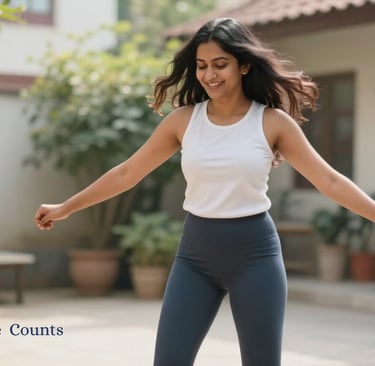
Dance offers a different way into movement. It doesn’t require special equipment, perfect timing or a set schedule. It’s simply about moving your body to music in a way that feels natural, enjoyable and supportive.
Dance as exercise isn’t about performance or choreography. It’s about reconnecting with movement as something humans have always done — to express energy, shift mood and feel more alive in their bodies.
Yes, Dance Counts as Exercise
From a physical perspective, dance absolutely counts.
When you dance, your heart rate increases, muscles engage, joints move through range and balance and coordination are challenged. Depending on how you move and the type of music you choose, dance can be gentle, moderate or surprisingly energetic.
What makes dance unique is that it often doesn’t feel like exercise. Music engages the brain in a way that shifts focus away from effort and towards enjoyment. This matters, because consistency has a far greater impact on long-term health than intensity.
People are far more likely to keep moving when movement feels good.
Why Dance Works When Motivation Is Low
One of the biggest barriers to exercise isn’t physical ability — it’s mental resistance. Busy schedules, low energy and the pressure to “do it properly” can make movement feel like another task on an already full list.
Dance bypasses much of that resistance. You don’t need to leave the house. You don’t need a set amount of time. You don’t need to be good at it.
One song is enough. Three songs is a bonus.
This makes dance especially helpful during busy seasons of life, times of stress or when traditional exercise feels heavy or unappealing.
Dance and Mood
Dance has a powerful effect on mood and emotional wellbeing.
Movement stimulates the release of endorphins, while music influences the nervous system, emotions and energy levels. When music and movement are combined, the effect is amplified.
Many people notice that even a short burst of dancing can lift their mood, release tension or shift their mental state. Dance can be energising when you feel flat, or grounding when you feel stressed.
It’s movement that meets you where you are.
Supporting the Nervous System
Unlike rigid or highly structured exercise, dance allows for intuitive movement. This supports nervous system regulation by helping release stored tension, particularly in areas like the shoulders, hips and spine.
For people who spend a lot of time in their heads, dance brings attention back into the body. This supports emotional regulation, presence and a greater sense of ease.
From a wellbeing perspective, this is just as important as fitness or strength gains.
Making Dance Part of Everyday Life
Dance doesn’t need to be scheduled like a workout. In fact, it works best when it’s woven into everyday life.
It might happen while cooking dinner, cleaning the house, getting ready in the morning or taking a short break during the day. It could be a quick shuffle in the kitchen, a sway while folding laundry or a spontaneous moment when a favourite song comes on.
Think of dance as movement you sprinkle into your day rather than something you have to complete perfectly. These small moments support circulation, joint mobility, mood and energy — without adding pressure or guilt.
Over time, they add up.
A More Sustainable Way to Move
Dance reminds us that movement doesn’t have to be hard or punishing to be effective. When exercise feels enjoyable and accessible, it becomes something we’re more likely to return to.
If traditional exercise feels like too much right now, dancing might be a gentler and more sustainable place to start.
Turn on music you enjoy. Move in whatever way feels natural. Let go of how it looks and focus on how it feels.
That’s movement done your way.
Phone/WhatsApp
+64 21 020 29366
Waikato Contact
Hours
Tuesday to Saturday 9am to 6pm
Please get in touch to enquire about alternative timing
Professional Affiliations



Legal Information
At Wellness Your Way Ltd, we value transparency and integrity in all that we do. Our legal policies outline how we protect your privacy, manage your information and deliver services with care and professionalism.
Terms and Conditions: Explains how our services operate, including payments, cancellations, digital resources and client agreements.
Privacy Policy: Details how we collect, store and protect your personal information in accordance with New Zealand privacy standards.
Disclaimer: Clarifies that our wellness, nutrition and NLP coaching services are for educational and lifestyle purposes only and are not a substitute for medical care.
© 2025 Wellness Your Way Ltd. Wellness Your Way® and the Wellness Your Way logo are registered trademarks of Wellness Your Way Ltd. All rights reserved.
Victoria Kruse | Wellness Your Way Ltd
Health & Nutrition Coaching | NLP Coaching
New Zealand